HERITAGE LINKS · ACCESSIBILITY
Heritage hasno single way in.
Access begins before arrival and continues through movement, information, touch, sound, language and digital experience. HERITAGE LINKS brings these paths together across Greece and Italy.

ACCESS IS A SYSTEM
A ramp alone is not accessibility. A website alone is not accessibility. Access exists when the whole journey works together.
HERITAGE LINKS combines physical tools, digital platforms, tactile models, clear information and immersive technologies so that more people can engage with cultural landscapes in meaningful ways.
FOUR ACCESS PATHWAYS
Different needs. Equal right to experience heritage.
MOVE
Physical access
Routes, surfaces, resting points, transport information and realistic preparation help visitors understand what a place requires before they arrive.
PERCEIVE
Sensory access
Braille, tactile forms, strong contrast, audio description and multimodal interpretation make heritage available through more than one sense.
UNDERSTAND
Cognitive access
Clear structure, plain language, predictable navigation and layered content reduce unnecessary complexity without reducing cultural meaning.
CONNECT
Digital access
WebGIS, virtual reality, augmented reality and three-dimensional content extend the experience before, during and beyond the physical visit.
THE ACCESS STACK
Design the whole experience, not a single feature.
Prepare the visit
Route conditions, accessible services, travel times, gradients, sensory information and digital previews reduce uncertainty.
Navigate with confidence
Clear wayfinding, Braille signage, readable interpretation and well-chosen information points support independent exploration.
Understand form and space
Three-dimensional reproductions allow monuments, details and structures to be explored through touch and proximity.
Enter through digital experience
Virtual and augmented reality make difficult-to-reach or fragile heritage understandable without replacing the value of the physical place.
ACCESSIBILITY LAB
Technology becomes meaningful when it opens another door.
WEBGIS
An interactive route that can be explored before arrival
Maps, site information and cultural context come together in an open digital environment designed to support planning and discovery.
VR / AR
Immersive access to places that may be distant, fragile or difficult to reach
Digital environments and augmented content extend interpretation without turning technology into a substitute for the place itself.
3D PRINTING
Cultural monuments translated into tactile physical models
Three-dimensional reproductions support people with severe visual impairment by making shape, proportion and detail available through touch.
3D SCANNING
Accurate digital models for interpretation, preservation and reuse
Laser scanning creates reusable cultural content for virtual platforms, education and future accessible experiences.
FROM COMMITMENT TO OUTPUT
Access becomes real through tools people can use.
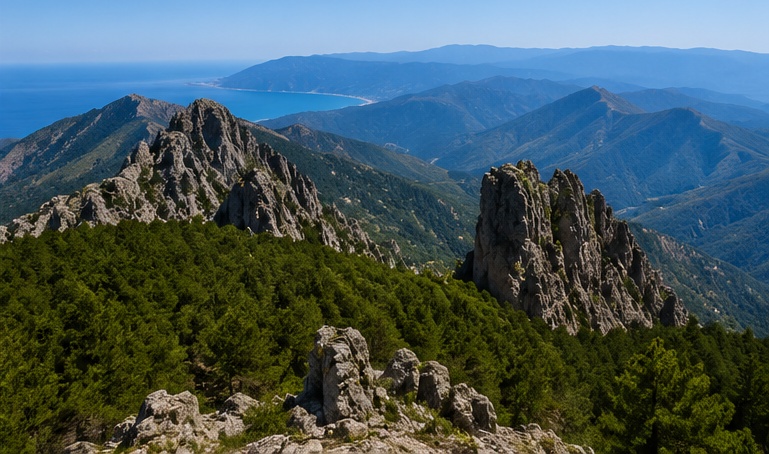
HERITAGE LINKS combines a physical pilot in Aspromonte with cross-border digital and tactile tools intended to be reused across the route.
100
accessible route signs with Braille planned for the Aspromonte Geopark
40
physical 3D monument models planned across the four regions
40+
digital models planned through 3D scanning and AR/VR adaptation
500
people targeted through accessibility-focused communication and inclusive resources
ACCESS IS PART OF HERITAGE
A place is not fully shared until more people can enter its story.
Explore the route through physical, tactile and digital experiences designed to expand participation across Greece and Italy.
Project co-funded by the European Union, European Regional Development Fund (E.R.D.F.) and by National Funds of Greece and Italy.