HERITAGE LINKS DESTINATION · GREECE
Zagori
Where stone villages and mountain paths become a living cultural landscape
A UNESCO cultural landscape where stone-built villages, arched bridges, sacred places and mountain routes reveal a long relationship between communities and the Pindus environment.
WORLD HERITAGE
Zagori Cultural Landscape
THE DESTINATION
A landscape shaped by stone, movement and community
Mountain villages. Arched bridges. A living cultural system.
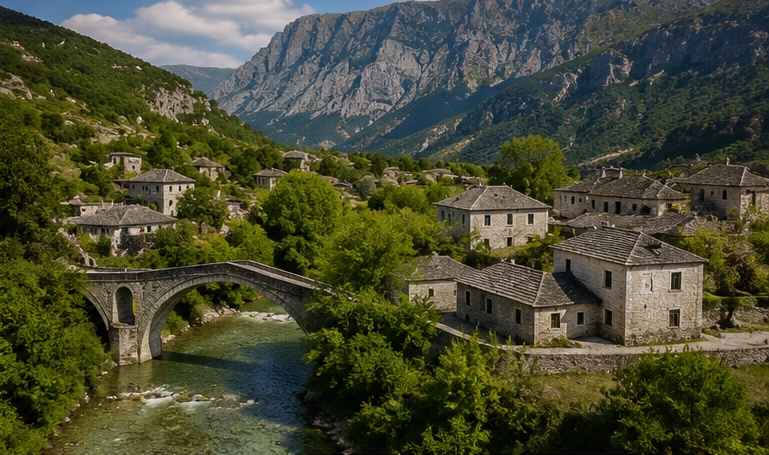
Zagori is a mountainous cultural landscape in Epirus where traditional settlements, stone architecture and historic routes express the close relationship between communities and their environment.
Its villages were built using local stone and connected through paths, stairways and arched bridges. Together with forests, gorges, farmland and sacred places, these elements form a coherent landscape shaped by mobility, cooperation and adaptation to mountain life.
Recognised by UNESCO as a Cultural Landscape in 2023, Zagori contributes to HERITAGE LINKS as a model for integrated conservation, responsible tourism, community participation, accessibility and cross-border knowledge exchange.
HERITAGE PROFILE
Country
Greece
Region
Epirus
Heritage focus
Cultural landscape and vernacular stone architecture
Route role
Mountain communities, routes and shared conservation knowledge
WHY ZAGORI MATTERS
A mountain landscape shaped by collective knowledge
Zagori brings together settlements, paths, bridges, sacred monuments and natural systems in a landscape where cultural heritage is inseparable from community life.
Stone-Built Settlements
Traditional villages use local stone, compact forms and carefully adapted public spaces to respond to the climate and terrain of the Pindus mountains.
Paths and Bridges
Historic paths and arched bridges connected villages, seasonal activities and trade, creating an infrastructure that is both practical and culturally significant.
Community Landscape
Residents, craftspeople, institutions and cultural organisations preserve knowledge, traditions and practices that continue to give meaning to the landscape.
HERITAGE LINKS IN ZAGORI
Connecting restoration, resilience and community-led tourism
Zagori contributes to a common Greece–Italy approach that combines monument restoration, landscape protection, risk assessment, accessible interpretation and sustainable visitor management.
- Cooperation among UNESCO site managers, conservation specialists and local institutions.
- Risk assessment addressing climate change and overtourism.
- Digital documentation, 3D reproduction and accessible cultural experiences.
- Capacity building, knowledge exchange and participation by local communities.
- Integration into the GR–IT World Heritage Culture Route.
PILOT INTERVENTION
Holy Monastery of Prophet Elias, Vitsa
The stabilisation and restoration of the Holy Monastery of Prophet Elias — Profitis Ilias — in Vitsa is the principal HERITAGE LINKS demonstrative intervention in Zagori.
The works concern the monastery’s auxiliary buildings, including the north, south and west wings, with interventions on roofs, walls, floors, frames and the surrounding area. The project protects the monument’s architecture, frescoes and communal significance.
The restored monastery is intended to operate as an open museum and a venue for cultural activities, information events and year-round visitor experiences, while demonstrating restoration practices that can be transferred to other heritage sites.
FROM MONUMENT TO OPEN MUSEUM
A pilot for sustainable restoration
The intervention combines structural conservation, improved visitor use and cross-border expertise, creating a practical reference for architects, heritage professionals, institutions and local stakeholders.
Expected contribution
Stabilised historic structures, an enriched visitor experience and a transferable model for future conservation initiatives across Zagori and the GR–IT route.
A RESPONSIBLE HERITAGE DESTINATION
Protecting a dispersed mountain heritage while improving access
SUSTAINABLE TOURISM
Year-round rural tourism
Distributing visits among villages, routes, seasons and cultural sites can support local economies while protecting fragile places from concentrated visitor pressure.
CLIMATE RESILIENCE
Knowledge for protection
Risk assessment, monitoring and professional cooperation support more resilient responses to weather extremes, erosion, changing moisture and pressures affecting stone buildings, paths and the wider landscape.
ACCESSIBLE HERITAGE
Physical and digital access
Inclusive information, digital models, 3D reproductions and virtual experiences can make Zagori’s dispersed and sometimes difficult-to-reach heritage understandable to wider audiences.
“
In Zagori, heritage lives in the routes, skills and relationships that connect one village to another.
HERITAGE LINKS · PEOPLE AND PLACES
COMMUNITY AND CULTURAL EXCHANGE
Knowledge carried by communities and shared across borders
Residents, craftspeople, cultural organisations, tourism operators, public institutions and heritage professionals all contribute to the long-term care and interpretation of Zagori’s cultural landscape.
Workshops, seminars and Community of Practice activities create opportunities to share restoration methods, visitor-management approaches, local knowledge and accessible ways of interpreting the landscape.
Young people, cultural ambassadors and cross-border visitors help carry this knowledge forward, strengthening relationships between the mountain communities of Epirus and partner territories in Italy.
THE GR–IT WORLD HERITAGE CULTURE ROUTE
Four destinations, one shared journey
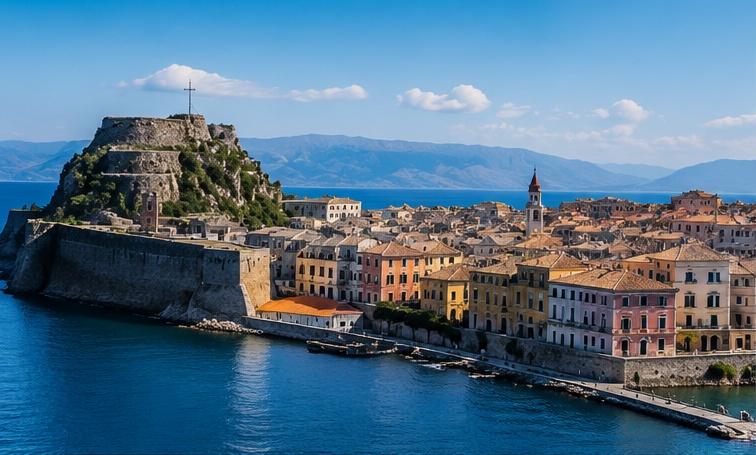
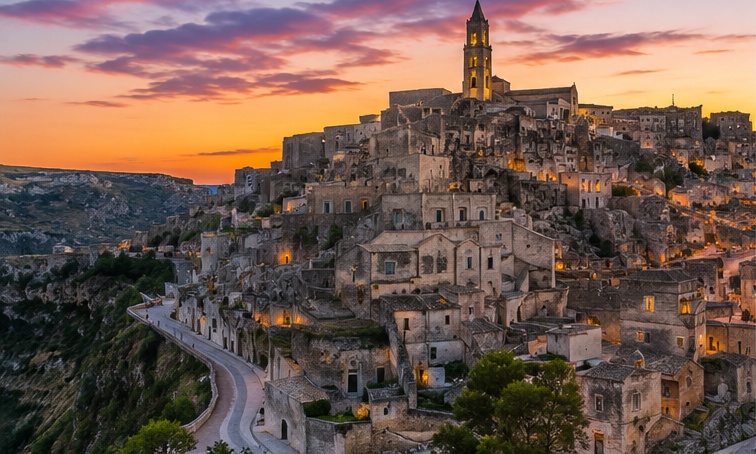
Zagori joins Corfu, Matera and Aspromonte in a cross-border itinerary connecting UNESCO heritage, cultural landscapes, communities and responsible travel experiences.
GREECE
Zagori
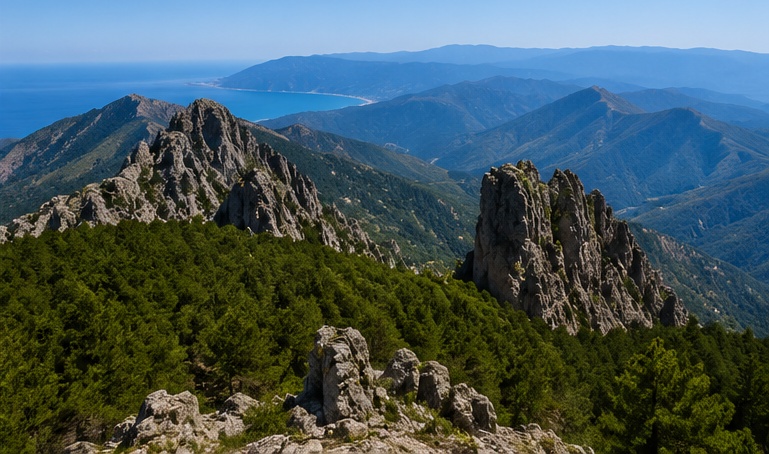
Stone villages, bridges and mountain paths.
CONTINUE THE JOURNEY
Stone paths. Shared memory. A landscape that connects Europe.
Explore the connections between places, communities and cultural traditions across Greece and Italy.
Project co-funded by the European Union, European Regional Development Fund (E.R.D.F.) and by National Funds of Greece and Italy.